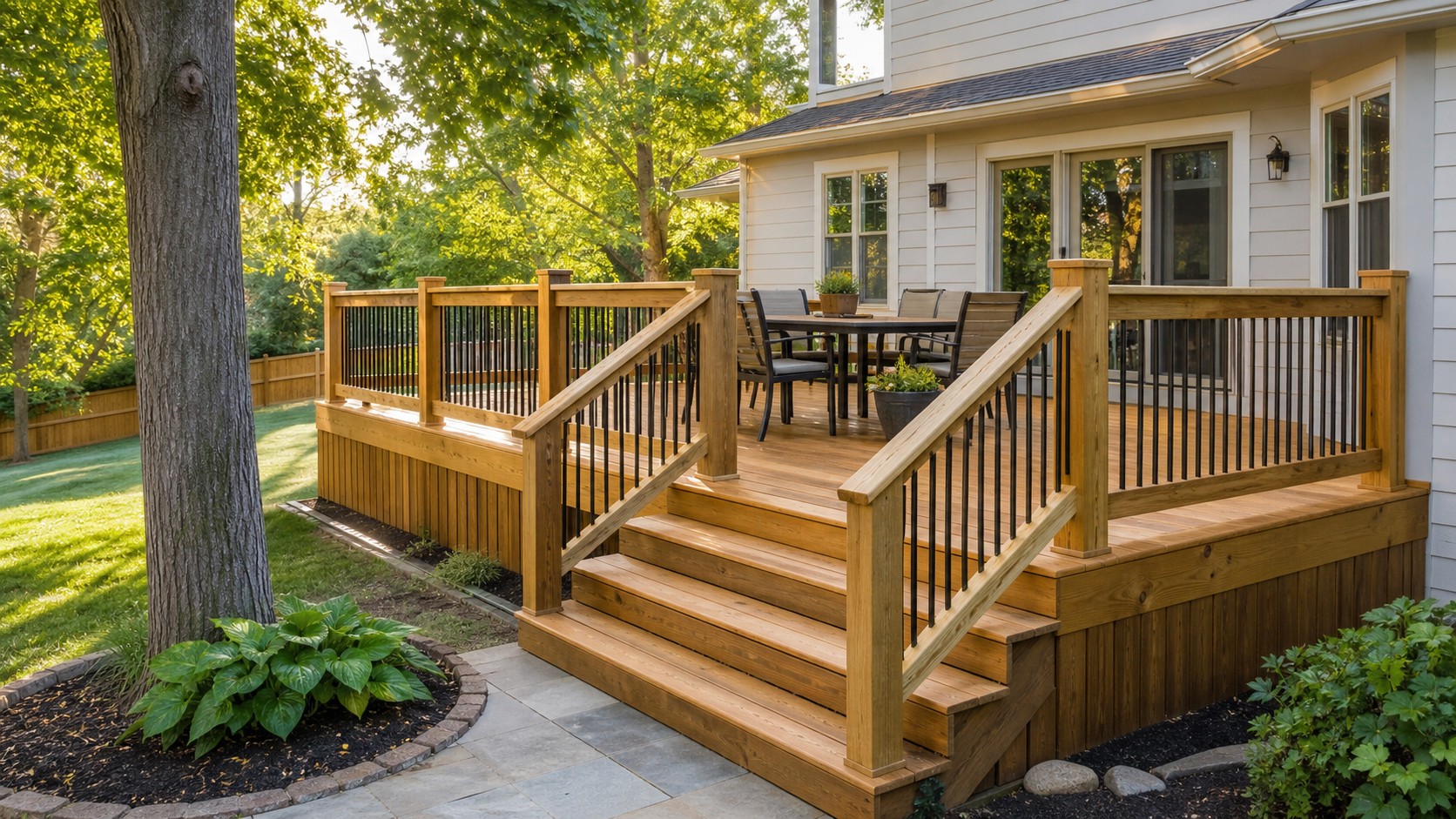
A backyard deck can look fine from the patio door and still have problems hiding under the surface. For homeowners in Columbia, IL, deck repair often starts with a simple question: is this normal wear, or is it time to call someone before the next cookout, storm, or busy weekend puts more stress on the structure?
Southern Illinois weather is hard on outdoor wood and fasteners. Rain, humidity, summer heat, and freeze-thaw cycles can all work into boards, railings, stairs, posts, and ledger connections over time. That does not mean every weathered deck needs to be replaced. It does mean older backyard decks deserve a careful look before loose boards or soft spots turn into a bigger repair project.
This checklist is written for homeowners who want a practical way to evaluate deck concerns before calling a contractor. It will not replace an on-site inspection, but it can help you understand what you are seeing, describe the issue clearly, and decide whether professional deck repair in Columbia IL should move up your home maintenance list.
Start With The Areas People Touch And Step On
The easiest place to begin is the walking surface. Deck boards take constant abuse from shoes, furniture, water, leaves, grills, planters, pets, and sun exposure. Walk slowly across the full deck and pay attention to how the surface feels under your feet. A board that flexes more than the others, feels spongy, lifts at one end, or shifts when stepped on is worth taking seriously.
Surface wear is not always a structural emergency. Boards can cup, split, or fade as they age. The concern grows when movement, softness, or exposed fasteners show that the board is no longer holding the way it should. Nails that have backed out, screws that no longer bite, and boards that bounce near their ends may point to weakening material below the surface.
Look Closely At Stairs And Landings
Stairs deserve extra attention because people naturally put more force on them. Check each tread, the stringers along the side, and the connection where the stairs meet the deck. If a step rocks, tilts, or feels uneven, do not ignore it. A small stair issue can make the whole deck feel unsafe even when the main platform is still solid.
Landings and transitions also matter. The spot where the deck meets the yard or patio often sees more dirt and moisture than the rest of the structure. If boards near the bottom of the stairs stay wet longer, show dark staining, or feel soft at the edges, the repair may need to address drainage and material condition instead of only replacing the visible board.
Check Railings, Posts, And Guard Areas Before The Deck Gets Busy
Railings are one of the first safety features guests notice, but they are also one of the easiest areas to underestimate. A railing should not wobble when someone leans on it. If posts move at the base, balusters are loose, or the top rail shifts with light pressure, the connection may need attention.
For families who use their deck often, railings take more wear than many homeowners realize. Kids lean on them. Guests rest drinks on them. Furniture gets bumped into them. Wind and weather push against them year after year. A railing problem may be caused by the post itself, the fasteners, the blocking behind it, or the condition of the surrounding deck framing.
Use this quick railing check before a deck sees heavy use:
- Press gently against each railing section and watch for movement at the posts.
- Look for missing, rusted, or loose fasteners around rails and balusters.
- Check whether any post base is cracked, dark, soft, or pulling away.
- Look for gaps that have opened up where railing sections meet stairs.
- Make note of any area that feels different from the rest of the deck.
If one railing section is loose, it may be a focused repair. If multiple sections move or the posts feel weak at the base, the issue may be more widespread. That is when a deck contractor in Southern IL can help determine whether the repair is limited to hardware and blocking or whether parts of the deck structure need a deeper look.
Look Under The Deck When You Can Do So Safely
The underside of a deck tells a different story than the top. From below, you can often see joists, beams, posts, hangers, and fasteners that are hidden from normal view. Only check this area if you can access it safely from the ground. Do not climb into tight, unstable, or unsafe spaces just to inspect a deck.
Look for wood that appears dark, crumbly, cracked, or separated. Pay attention to areas where leaves, soil, or mulch touch wood. Wood that stays damp is more likely to deteriorate. Rusted connectors, missing hangers, or fasteners that look loose can also be clues that the deck has more going on than surface board wear.
The ledger board is especially important because it is the connection between the deck and the house. Homeowners do not need to diagnose that connection on their own, but they should take warning signs seriously. Water staining near the house, gaps where the deck meets siding, or movement along that side of the deck are good reasons to call for a closer review.
Do Not Cover Up A Moisture Problem
A common mistake is replacing a bad board without asking why it failed. If one board rotted because a planter trapped water, the fix may be simple. If several boards are soft in the same area, the deck may have a drainage, flashing, or ventilation issue. Repairing the visible piece without addressing the moisture pattern can lead to repeat problems later.
That is why a good deck repair conversation should include both the damaged material and the conditions around it. Where does water go after a storm? Are leaves collecting between boards? Does the deck dry evenly? Are posts sitting in soil or mulch? These observations help separate ordinary wear from a problem that needs a better repair plan.
Decide Whether Repair Or Replacement Makes More Sense
Not every deck with damage needs a full deck replacement. Focused repairs can make sense when the structure is mostly sound and the problem is limited to a few boards, steps, rail sections, or fasteners. Replacement becomes a stronger conversation when the same issue appears throughout the deck, when framing members are damaged, or when the layout no longer fits how the household uses the space.
Material choice can also affect the direction of the project. Some homeowners want to repair existing wood and keep the deck simple. Others use a repair conversation to ask about composite decking, updated railings, or a layout change. Those upgrades can be useful, but they should follow the condition of the deck and the homeowner's goals, not pressure to replace something that could reasonably be repaired.
Before you decide, gather a few details that make the conversation easier:
- Which areas feel loose, soft, uneven, or unsafe?
- How old is the deck, if you know?
- Has the same spot been repaired before?
- Does the problem get worse after rain?
- Are you hoping to preserve the current deck or change the design?
Those notes help a local contractor near you understand whether you are asking for a simple repair, a safety review, or early planning for a larger outdoor update. They also help keep the first conversation grounded in what is actually happening at your home.
When To Call For Deck Repair In Columbia IL
Call for help when a deck issue affects safety, keeps coming back, or is difficult to see clearly from the surface. Loose railings, moving stairs, soft boards, visible framing damage, and water problems near the house are all worth professional attention. Even if the final repair is small, an experienced set of eyes can help identify whether the visible damage is the whole problem or just the easiest part to see.
For Columbia homeowners, the most useful repair visit is not just about swapping boards. It is about understanding how the deck is aging, where weather is causing stress, and what work would make the space more dependable for everyday use. A practical review can also help you avoid spending money in the wrong order, such as staining boards that should be repaired first or replacing surfaces while ignoring weak rail connections.
If your deck has soft boards, loose stairs, wobbly railings, or weather damage you are not comfortable judging on your own, contact R Squared Construction to talk through the problem and request an estimate. Bring your notes, photos, and concerns. The goal is to choose a repair path that fits the condition of the deck and keeps the next step clear.
A deck is part of how a home gets used, especially when the weather is nice and people naturally gather outside. Taking small warning signs seriously now can make the space easier to maintain, easier to explain to a contractor, and less stressful when it is time to plan the next repair.